A Proven Technique That’s Identified Every Market Bottom

Every investor wants to buy at the bottom. To be able step in when pessimism peaks and ride the next major advance higher is an appealing notion. Oftentimes, though, that instinct can cause the most damage.
Markets rarely reward those who try to predict turning points. According to William O’Neil, founder of Investor's Business Daily, you should focus on identifying when a new uptrend has already begun, rather than trying to call a bottom.
At the center of that approach is the concept of the “Follow-Through Day”, a simple but powerful indication that the market may be transitioning from correction to recovery. These don’t occur in moments of clarity. Instead, they form in environments dominated by fear, negative headlines, and persistent selling pressure. Even after the market appears to stabilize, early rallies often fail and pull investors back into the decline. This is why trying to “catch the bottom” is so difficult.
O’Neil’s insight was to wait for confirmation. A Follow-Through Day typically occurs several days after a market low, once an initial rally attempt is underway. It’s marked by a strong advance in a major index, together with higher trading volume. That combination is critical because it signals that institutional investors, the real drivers of market trends, are beginning to step back in. Without that sponsorship, rallies tend to fade; with it, the odds begin to shift.
Historical studies of past market cycles show that about half to two-thirds of Follow-Through Days ultimately lead to sustained uptrends. While not every signal works, the absence of one is often a reason to remain defensive.
The current market environment offers a useful example of how this process unfolds. Recent volatility tied to the Iran war and sharp swings in oil prices has created the kind of uncertainty that often accompanies market corrections. The S&P 500 has experienced increased intraday volatility, with sentiment shifting quickly in response to headlines.
In this type of environment, it can be tempting to assume that a sharp downturn represents an opportunity. But until the market can stabilize and produce a credible Follow-Through Day, the risk remains that any rally attempt could fail.
O'Neil's approach reframes the goal. Instead of trying to buy at the lowest possible price, investors wait for evidence that the market is under accumulation again.
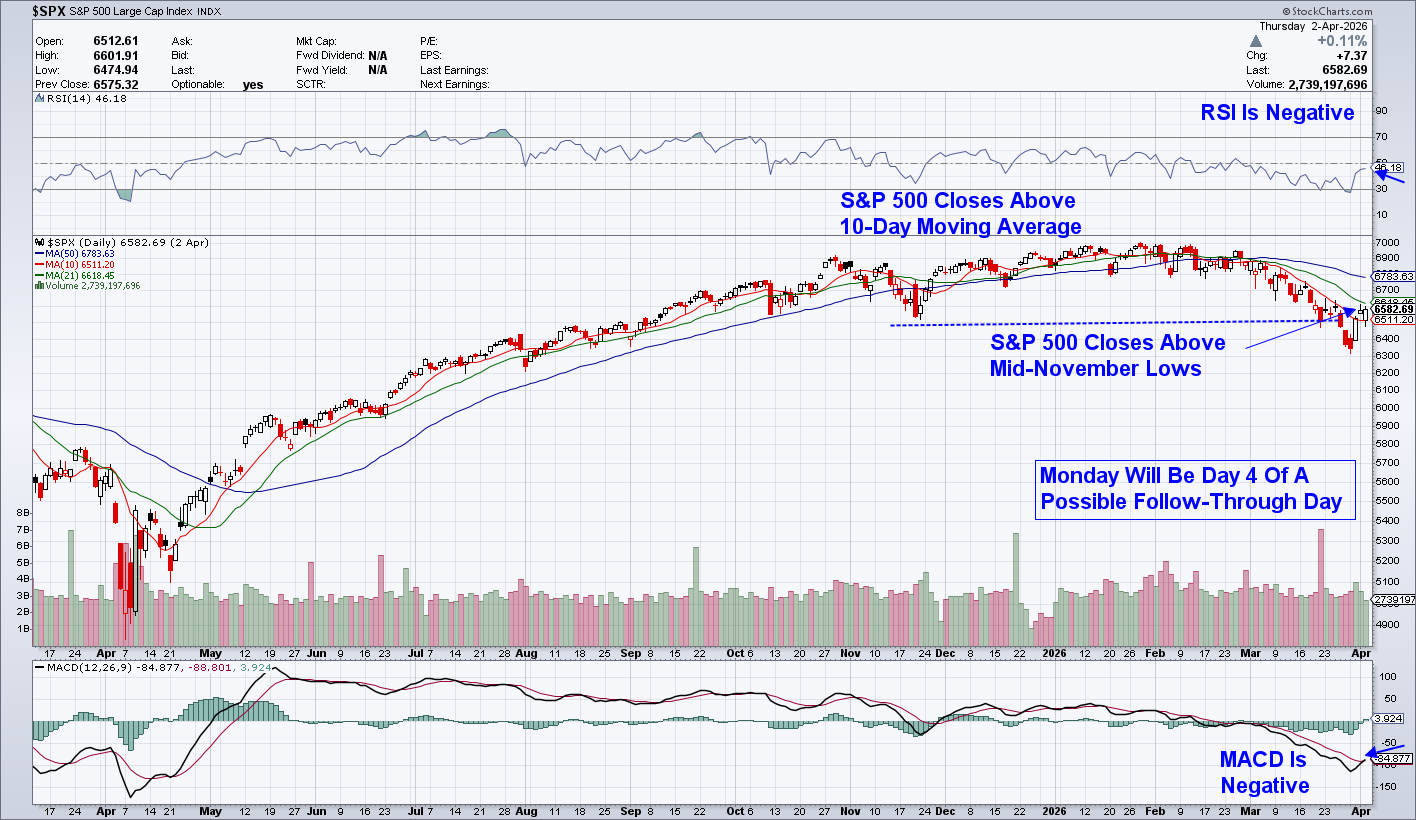
O’Neil’s research showed that the biggest winners are typically purchased not at their lowest point, but as they begin moving higher out of well-formed bases. This is where leadership becomes critical, as the strongest stocks are usually the first to emerge. These companies have superior earnings, strong relative strength, and leadership positions within their industries.
If you’d like to be kept up to date on when the markets are in an uptrend, use this link here to participate in a no cost 2-week trial of my twice weekly MEM Edge Report. More importantly, you’ll be alerted to the market leaders that are poised to greatly outperform in this next cycle. The investors who succeed over time are those who align themselves with confirmed trends.
Warmly,
Mary Ellen McGonagle
MEM Investment Research