StockCharts Insider: The Hidden Risks of Learning Trading on Social Media
Before We Dive In…
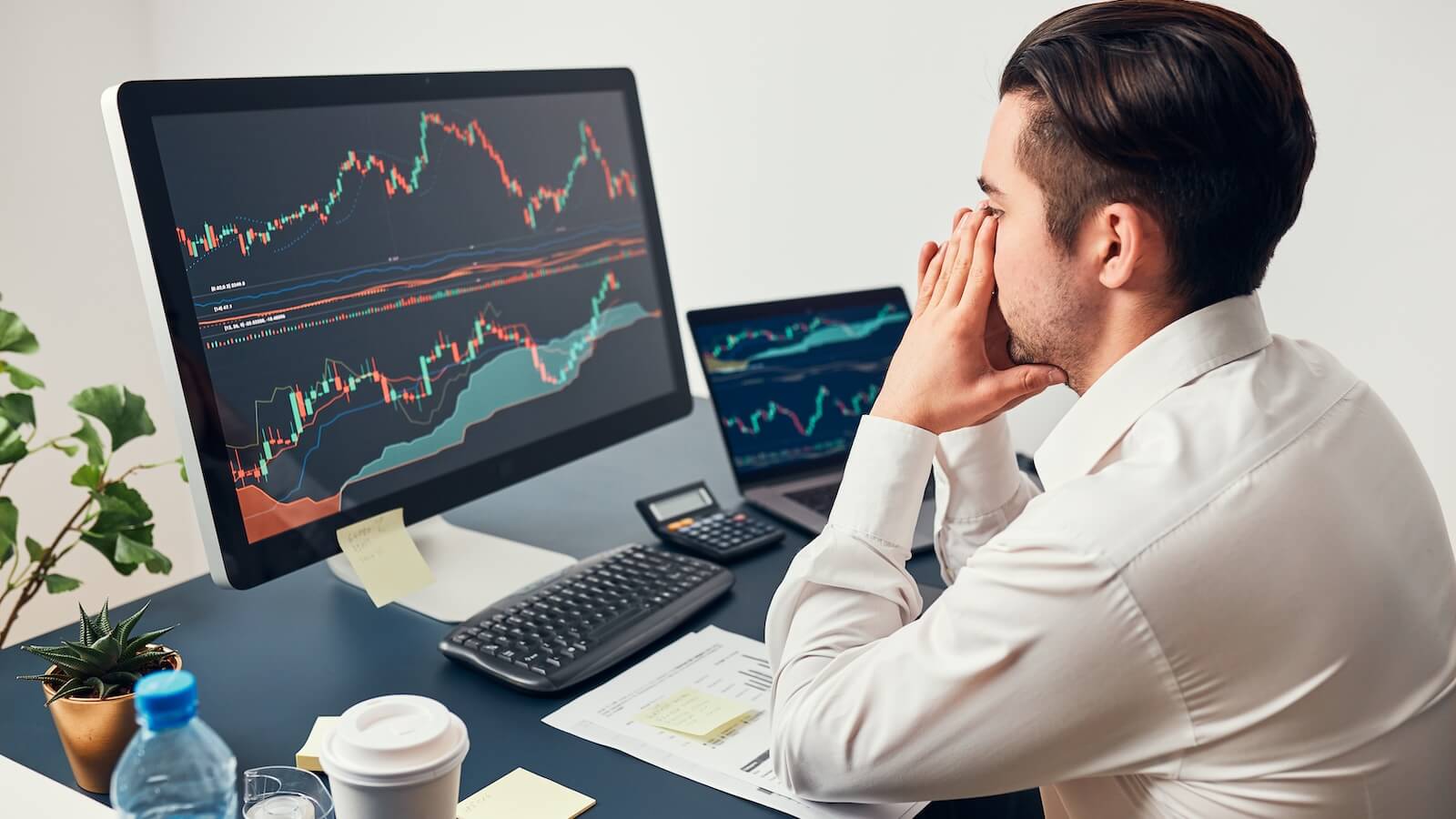
Scroll through YouTube or TikTok and you’ll find that trading looks easy. Clean charts, fast profits, flashy lifestyles…it’s everywhere! Even my 12-year-old son, after a few weeks of studying candlestick patterns (without telling me), has become an “expert” who asked if he can swing trade (or day trade) real money.
To be fair, social media can teach us a lot. But some topics, like trading, are riskier than others. I’m going to walk you through a few red flags. By the end, you should have clearer answers to questions like "What’s legit, and what isn’t?" and "When can good advice turn into a bad trade?"
Let’s get started.
The Rewards and Risks of Finfluencer Advice
Not all “finfluencers” (financial influencers) are bad. Some provide really good insights. But the problem isn’t always the influencer, or the advice. It’s the context.
A video short can’t explain the full spectrum of a trading method. And without the bigger picture, you won’t see most of the risks. In addition, a video short can’t focus on the risks of a method without killing the "vibe." It makes the ideas less appealing or convincing.
Here’s a wise quote from astrophysicist Neil deGrasse Tyson:
“A great challenge of life: Knowing enough to think you are right, but not knowing enough to know you are wrong.”
This perfectly captures what happens when early trading confidence arrives before real skills and experience. Most of us have been there at some point.
Here are a Few Red Flags to Watch Out For
So, here are some things to keep in mind when engaging with trading influencers.
1 - Only Winning Trades are Shown
An influencer shows you a trading setup. Clean execution. Easy profit. Where are the losing trades? Were there more losers than winners? If the “win rate” was high, how do you know the gains outweighed the losses (profit factor)?
If you can’t see the negatives, you’re seeing marketing, not education.
2 - No Detailed Talk of Risk Management
When it comes to minimizing losses and optimizing potential gains, position sizing—not just stop losses—is often the critical strategy. It’s such an important factor in trading that there are several detailed strategies to use, depending on your goals and risk tolerance. There are also several ways to deploy stop losses.
If position sizing, stops, and other risk control aren’t discussed, the strategy is woefully incomplete.
3 - Lifestyle Marketing Over Strategy
When an influencer shows off a luxury lifestyle—directly or indirectly—just be careful. Images of luxury cars, travel, and other fancy things can sell courses better than hard work. But only hard work—and that includes well-earned gains plus smaller losses—can teach you to be successful.
4 - Signals Without Explanation
If an influencer tells you to pull the trigger without explaining the entire context as to why, then you’re not learning. You’re following.
5 - FOMO Tactics
Messages like “don’t miss out on the move” or “here’s your last chance” rarely lead to good decisions, even if you end up with a few lucky trades. That’s because pressure replaces analysis.
6 - Affiliate Links Are Everywhere
There are trading coaches who make most of their money teaching. Their primary business may not be trading itself. Instead, it may be referrals, courses, and subscriptions.
7 - Overtrading is Encouraged
Constant action feels exciting. The problem is that this excitement runs dangerously close to gambling.
To be fair, some influencers do warn traders: Don’t take more than X trades per day or don’t risk more than X% per trade. But those rules don’t always account for the bigger picture, especially your account size and long-term sustainability. What if your capital can’t support that level of activity? What if the system itself isn’t profitable, yet you’re told to “stick with it”?
Sure, trading can be exciting at times. But most of the time, it should feel calculated; perhaps even a little boring. If you’re chasing thrills without doing the analytical work, then you may be transforming what should be a calculated risk into an unnecessary gamble.
My 12-Year Old’s Journey Through Candlestick Patterns
After a few weeks of watching traders on TikTok, my kid had already “mastered” several candlestick patterns. But one stood out: the hammer. He became obsessed with it.
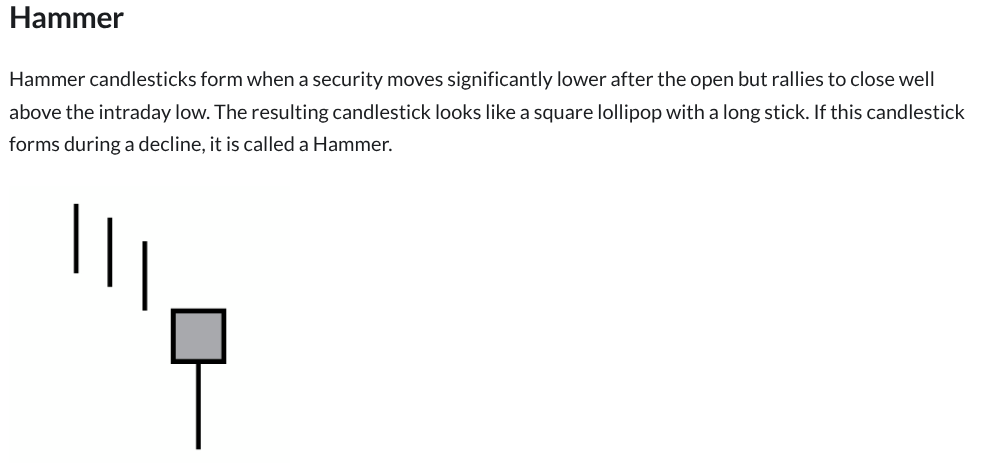
So after opening a simulation account, he went hunting for his first trade. Guess what it was: yes, a hammer pattern.
His favorite influencer was a “crypto bro.” And right on cue, he spotted what looked like a perfect hammer reversal forming on Bitcoin.
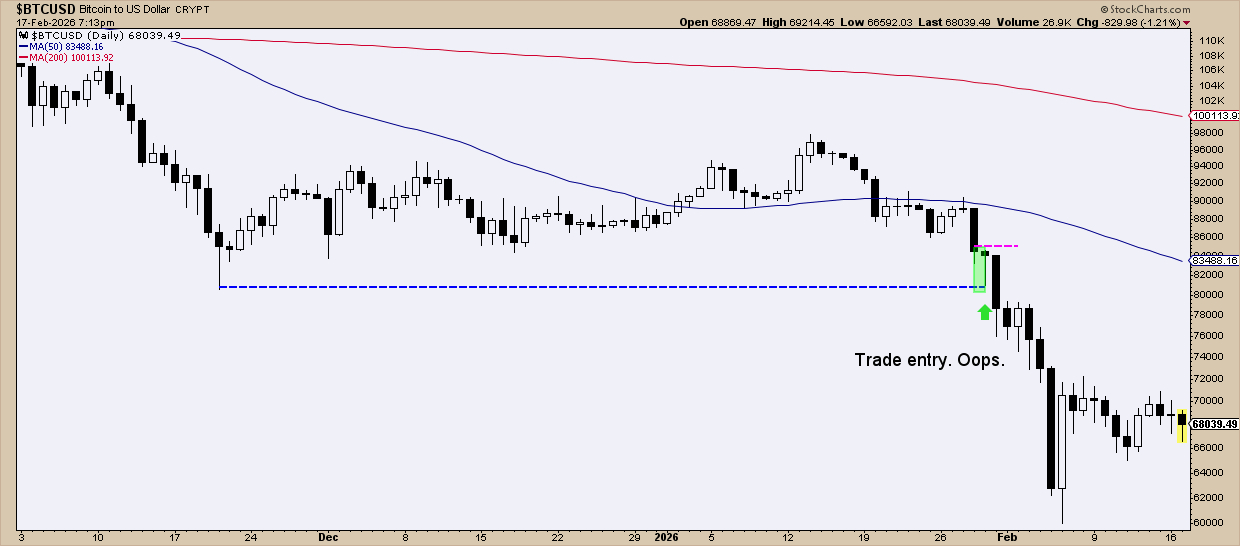
It’s not that the setup was bad, as a similar signal in another asset might have worked. It was the way the trade was approached and executed—i.e., the context.
He bought a full bitcoin at the close, committing roughly 83% of his $100,000 simulated account (so much for position sizing). He didn’t wait for a breakout (see magenta line), and he didn’t place a stop loss.
The hammer testing November resistance was enough justification for the trade, he thought. And sure, if he’d waited for a breakout and used a tight stop, the risk might have been reasonable.
But he didn’t have enough knowledge to see the bigger warning sign: price was trading below both the 50-day and 200-day simple moving averages. Plus, Wall Street was shifting to “risk-off” mode, which he also didn’t know.
You can figure out what happened next. The main point, though, is that a tighter trade setup with strategic position sizing might have made for a smarter trade, albeit a losing one.
And unlike my son’s paper trade, many traders make these same mistakes with real money, where the costs are much more damaging.
And That’s a Wrap
The goal isn’t to avoid learning from influencers. We all start somewhere. But your success won’t come from someone who’s always right. It comes from hard study and careful trading. Whoever or whatever you learn from, make sure to build your own process and study your own charts. Because in markets, confidence without understanding gets expensive fast. And learning when you’re wrong matters far more than believing you’re right.