Why Oil Prices May Stay Elevated Into Mid-2026 and the Impact On the Stock Market

Oil is once again at the center of the macro conversation. After a sharp resurgence driven by geopolitical tensions and supply disruptions, the key question for investors is no longer whether prices can spike, but how long they can stay elevated.
While consensus forecasts still point to moderation over time, a growing body of evidence suggests that oil prices could remain structurally higher through at least mid-2026.
A Market Defined by Geopolitical Risk
The most immediate driver of elevated oil prices is geopolitical instability, particularly in the Middle East. Recent disruptions are tied to tensions involving Iran and the closure of the Strait of Hormuz, which handles roughly 20% of global oil flows.
These risks aren’t hypothetical. Oil prices have already surged above $100 per barrel during recent flare-ups, marking one of the sharpest rallies since the 2022 energy shock.
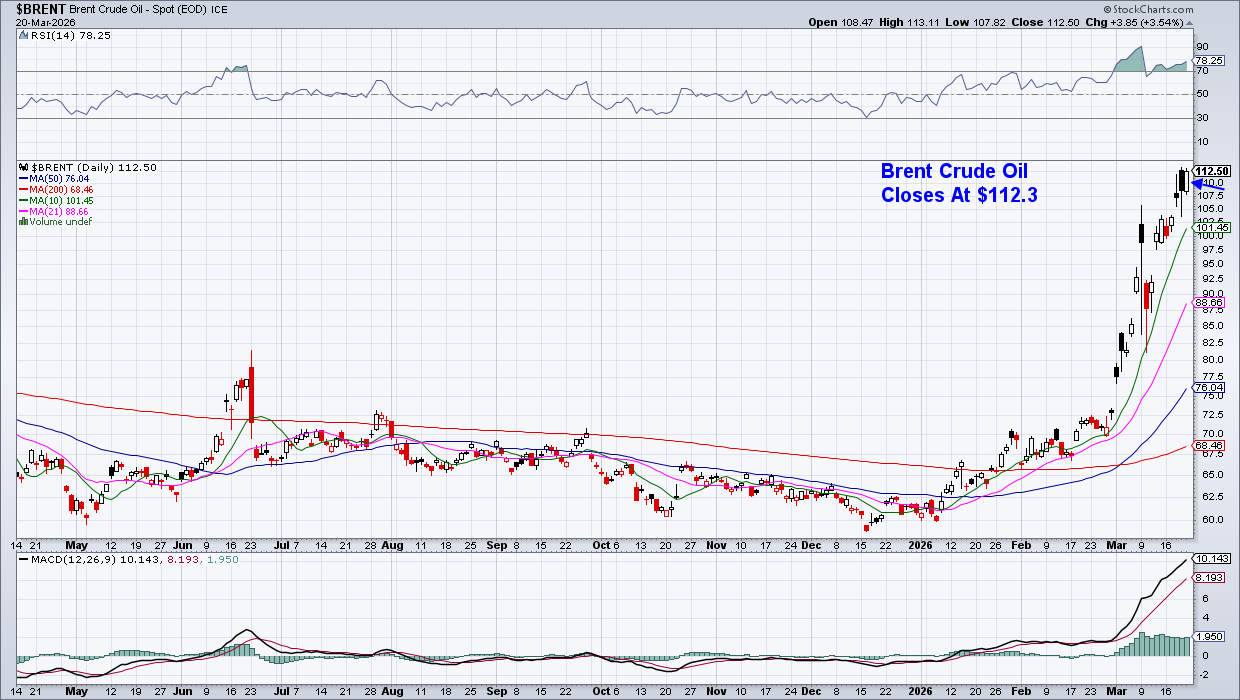
Even if these disruptions prove temporary, history suggests that geopolitical shocks tend to leave behind a lingering premium. Markets may retrace from peak panic levels, but they rarely return to pre-crisis pricing quickly, especially when underlying tensions remain unresolved.
This shift in outlook reflects a key dynamic: While long-term supply may exceed demand on paper, real-world constraints range from infrastructure bottlenecks to underinvestment in alternative sources. All of this limits how quickly supply can come online. As a result, the market remains far tighter than traditional models suggest.
Sustained higher oil prices have important implications for equities. First, they raise input costs and pressure margins, particularly for utilities, transportation, industrials, and consumer-related stocks. This is where higher fuel costs can erode profitability and dampen demand.
Second, elevated energy prices tend to keep inflation sticky. That, in turn, pushes interest rates higher and can lower the forward-looking value for tech stocks. However, not all sectors suffer. Energy stocks stand to benefit, and at this time, we’re seeing resilience in AI-related tech and industrials stocks.
Finally, higher oil prices often coincide with increased market volatility. Just as in past geopolitical episodes, equity pullbacks tied to energy shocks can be sharp, but, historically, they have also been relatively short-lived unless they trigger a broader economic slowdown.
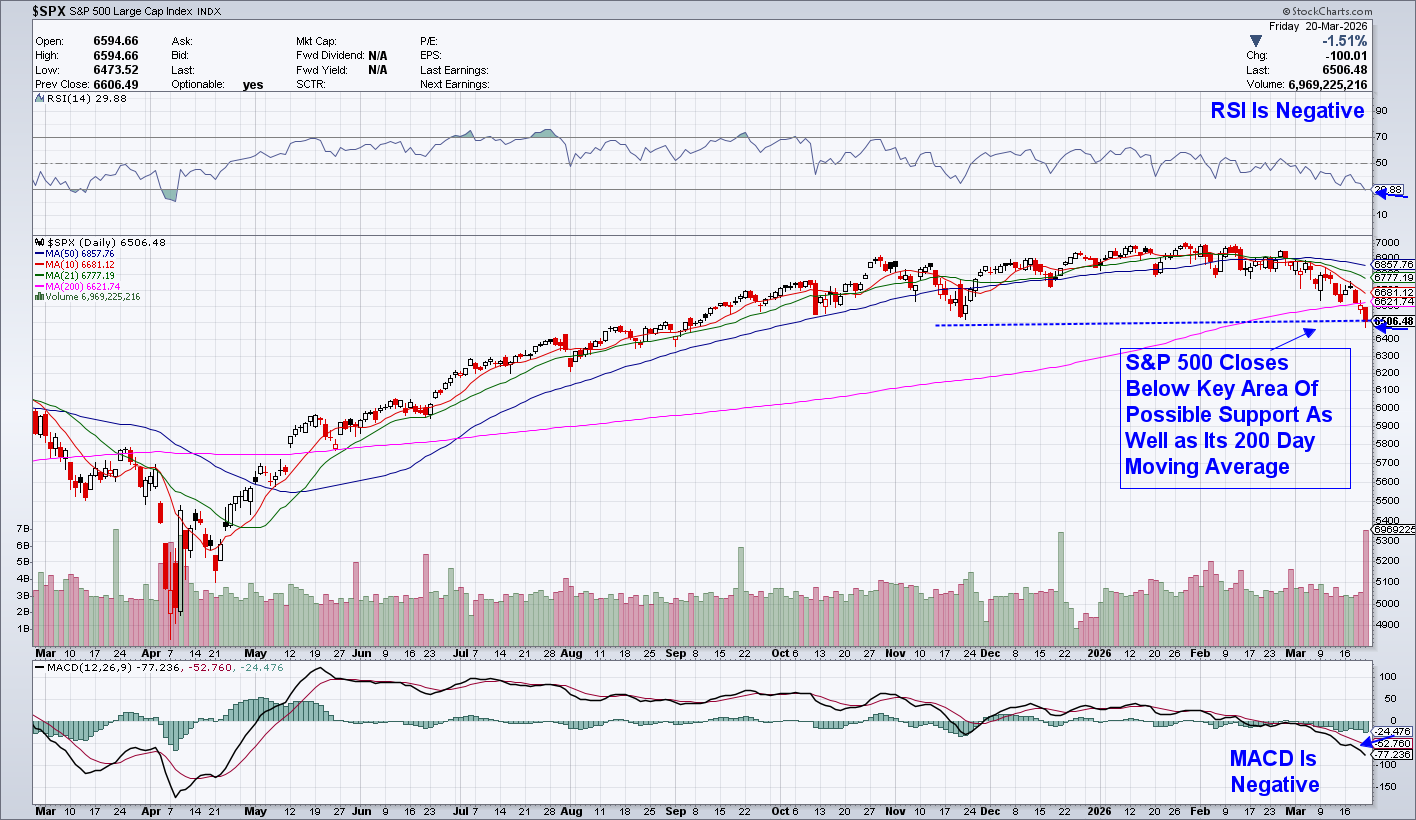
At this time, the broader markets are at a critical position, as the S&P 500 ($SPX) has closed below key support (dashed blue line) while 10 of the 11 S&P sectors are below their key 50-day moving averages. The Moving Average Convergence Divergence (MACD) is in negative territory.
Bottom Line: Higher for Longer Oil with Spikes
The most realistic outlook is that oil appears to be entering a higher-for-longer period. We’re seeing a structurally higher price floor, above at least $70 per barrel; there have been repeated geopolitical-driven spikes; global demand is resilient; and the normalization of supply is slower than expected.
Taken together, these possibilities suggest that oil prices are likely to remain elevated into mid-2026, even if they fluctuate along the way.
If you would like more detailed information outlining prior “oil shock” periods that were similar, as well as current market conditions, use this link here to trial my twice weekly MEM Edge Report at no cost. We’ll also highlight stocks that are currently in a position to trade higher.
Warmly,
Mary Ellen McGonagle
MEM Investment Research