Beyond Big Tech: What’s Driving the Surge in Consumer Stocks?
Key Takeaways
- While technology stocks are under pressure, a diverse group of consumer-related stocks has been heading higher.
- Companies with strong brands, clear value propositions, and diversified revenue are better positioned to navigate an inflationary environment.
- Three stocks are showing strength and worth considering for your investment portfolio.

As semiconductor stocks retreat, a group of retailers and consumer-facing businesses are reaching new highs. The underlying drivers reveal a market that rewards earnings resilience, pricing power, and company-specific execution.
A Different Kind of Market Leadership
The stock market is beginning to tell a more nuanced story about the American consumer. While concerns over inflation, elevated interest rates, and massive AI infrastructure costs have put pressure on the Technology sector, a diverse group of consumer-related stocks has been heading higher.
The advance in these stocks in a rising inflationary and interest rate environment is certainly worth noting. Investors appear to be distinguishing between companies that can sustain earnings growth despite macro pressures and those that are vulnerable to weakening discretionary spending.
Several distinct themes help explain this emerging leadership. Companies with strong brands, effective value propositions, and diversified business models appear better positioned to navigate an inflationary environment.
Strong Brand
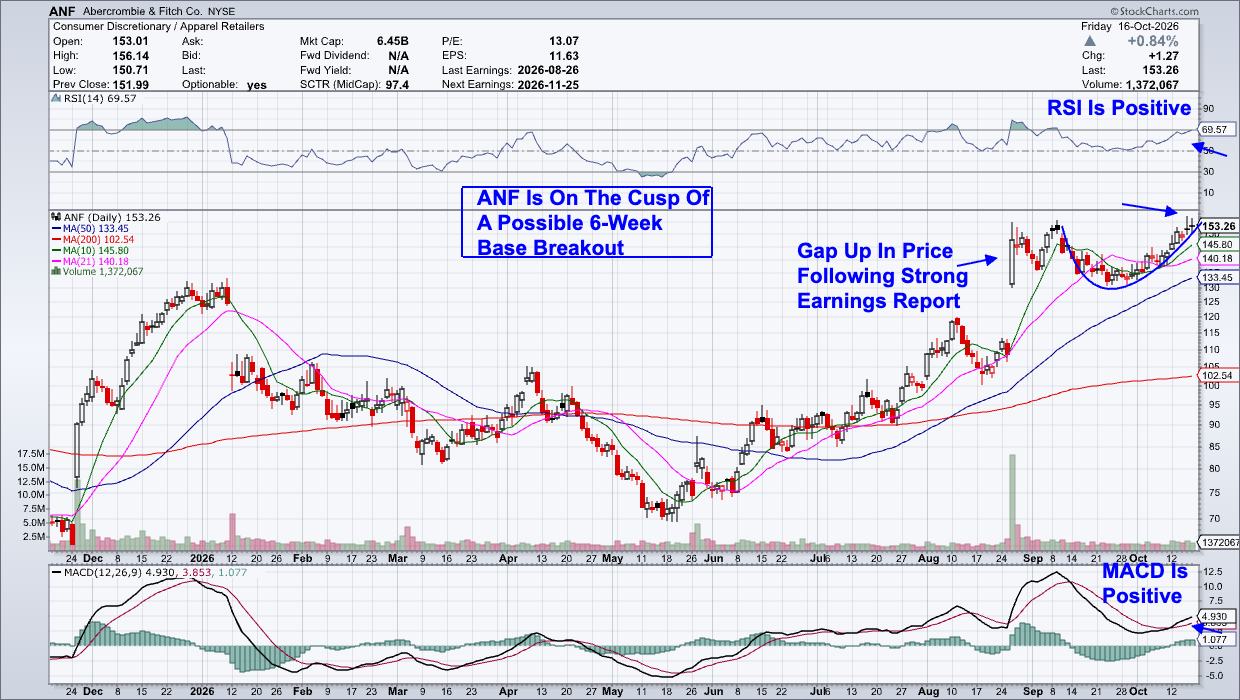
Abercrombie & Fitch (ANF) continues to benefit from healthy demand for its brands. The company reported record Q2 sales in late August, marking its 15th consecutive quarter of growth.
Abercrombie & Fitch also benefited from a one-time tariff refund of $100 million, which the company used to repurchase shares. Management also raised its full-year sales-growth forecast.
Persistent inflation can reinforce the competitive advantages of select retailers, especially those that provide discounts on essential goods.
Value Proposition
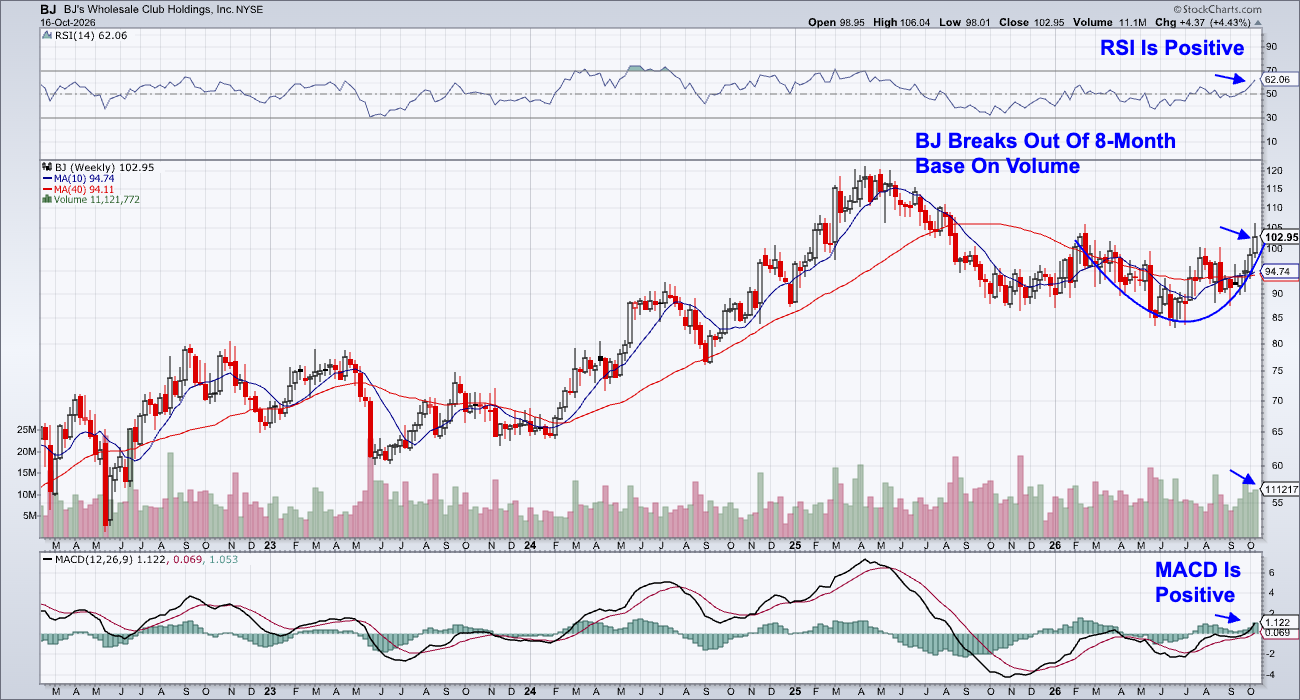
BJ’s Wholesale Club (BJ) reported strong second-quarter comparable sales growth and membership-fee income at its latest earnings release in mid-August. The membership model is important because recurring fee income helps support profitability beyond merchandise margins. BJ’s also raised its full-year adjusted earnings outlook, giving investors evidence that the company’s value proposition is translating into measurable operating performance.
BJ’s weekly chart below is particularly compelling following last week’s 8-month base breakout on above-average volume. The gain pushed the MACD into positive territory, where it joined the already-positive RSI.
Diversified Business Model
Urban Outfitters (URBN) offers a different example, with sales showing record growth in its latest quarter. Comparable retail sales grew across all brands, while subscription revenue from the new clothing rental company Nuuly, rose 28.6%. This demonstrates how established brands and newer business models can contribute to growth.

The strength in these consumer stocks shows that market leadership is broadening beyond AI and semiconductor stocks, which fell sharply last week. Rather than signaling a broad-based consumer boom, their gains point to a more selective market in which investors are rewarding companies with compelling brands, differentiated business models, and solid value propositions.
These are the same principles I use with my MEM Edge Report when selecting stocks for our Suggested Holdings List. This List is a part of my twice-weekly reports, which provide easily digestible, yet highly relevant insights into the markets. Use the link above for a no-cost, 2-week trial!
Warmly,
Mary Ellen McGonagle
MEM Investment Research