Three Areas of the Market That Could Thrive as Rates Decline

The 10-Year US Treasury Yield Index ($TNX) has been trending lower in June, reversing a trend of higher rates we had observed for much of Q2.
During a recent episode of my daily market recap show, I was asked, “So which stocks and groups tend to do well during a period of falling rates?”
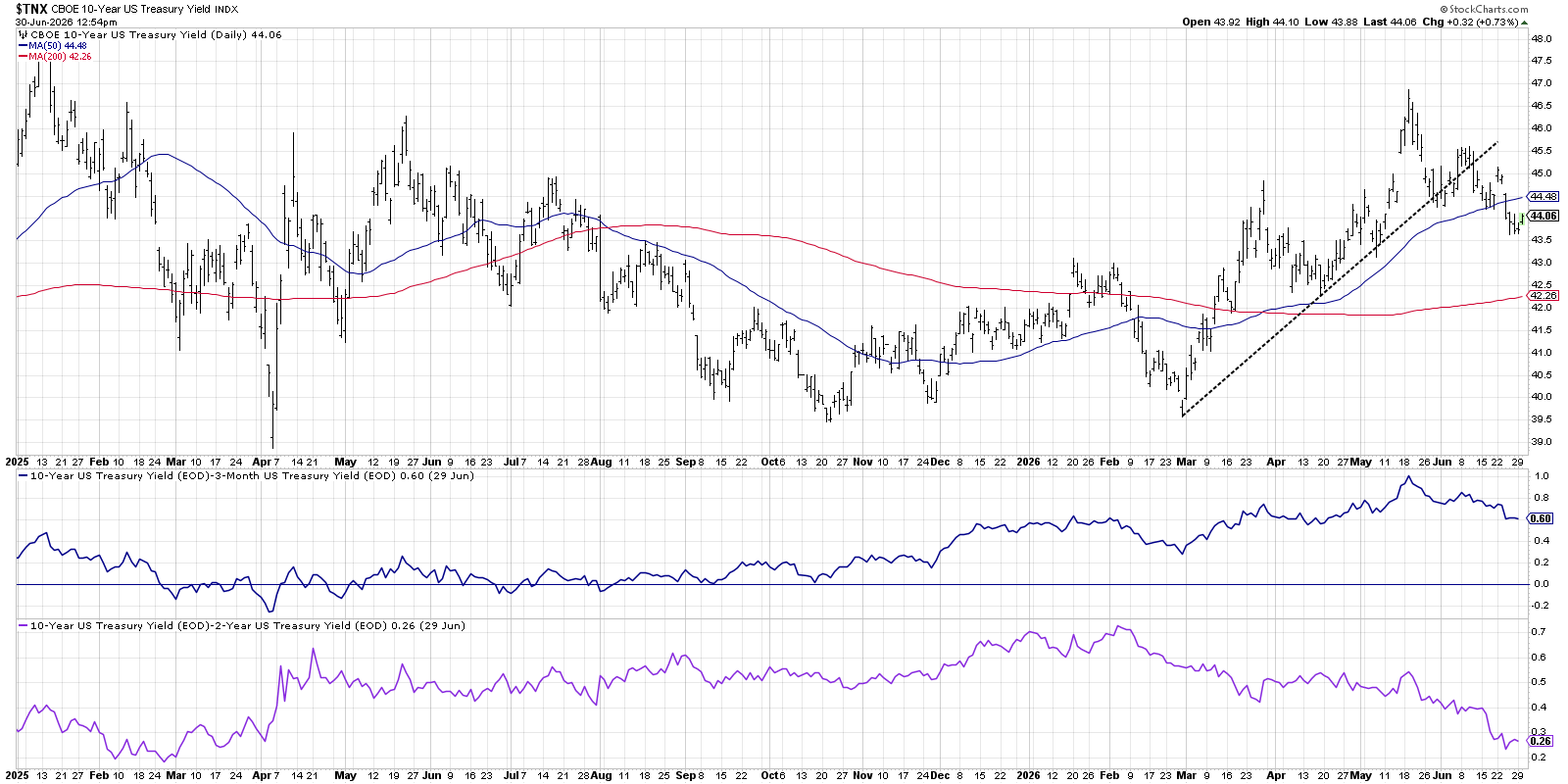
First off, let’s agree that the downside reversal in rates is real, with the $TNX breaking down through key trendline support earlier this month. The 10-Year is now below its 50-day moving average for the first time since March, and there is quite a bit of distance to the 200-day simple moving average (SMA) around 4.25%.
If long-duration Treasuries continue to rally and drive interest rates lower, there are several equity groups that stand to benefit from this macro shift. And while this interest rate environment doesn't happen in a vacuum, and there are indeed plenty of other forces at play to affect the performance of these assets, the tailwind of lower rates could still become an important factor into Q3.
Small Caps Tend to Outperform Due to Lower Borrowing Costs
Large-cap stocks won't necessarily need to borrow heavily to finance future growth. Though it appears we're in a period of heavy borrowing by big-cap tech to fund AI infrastructure projects, small-caps are usually more able to benefit from the lower borrowing costs.
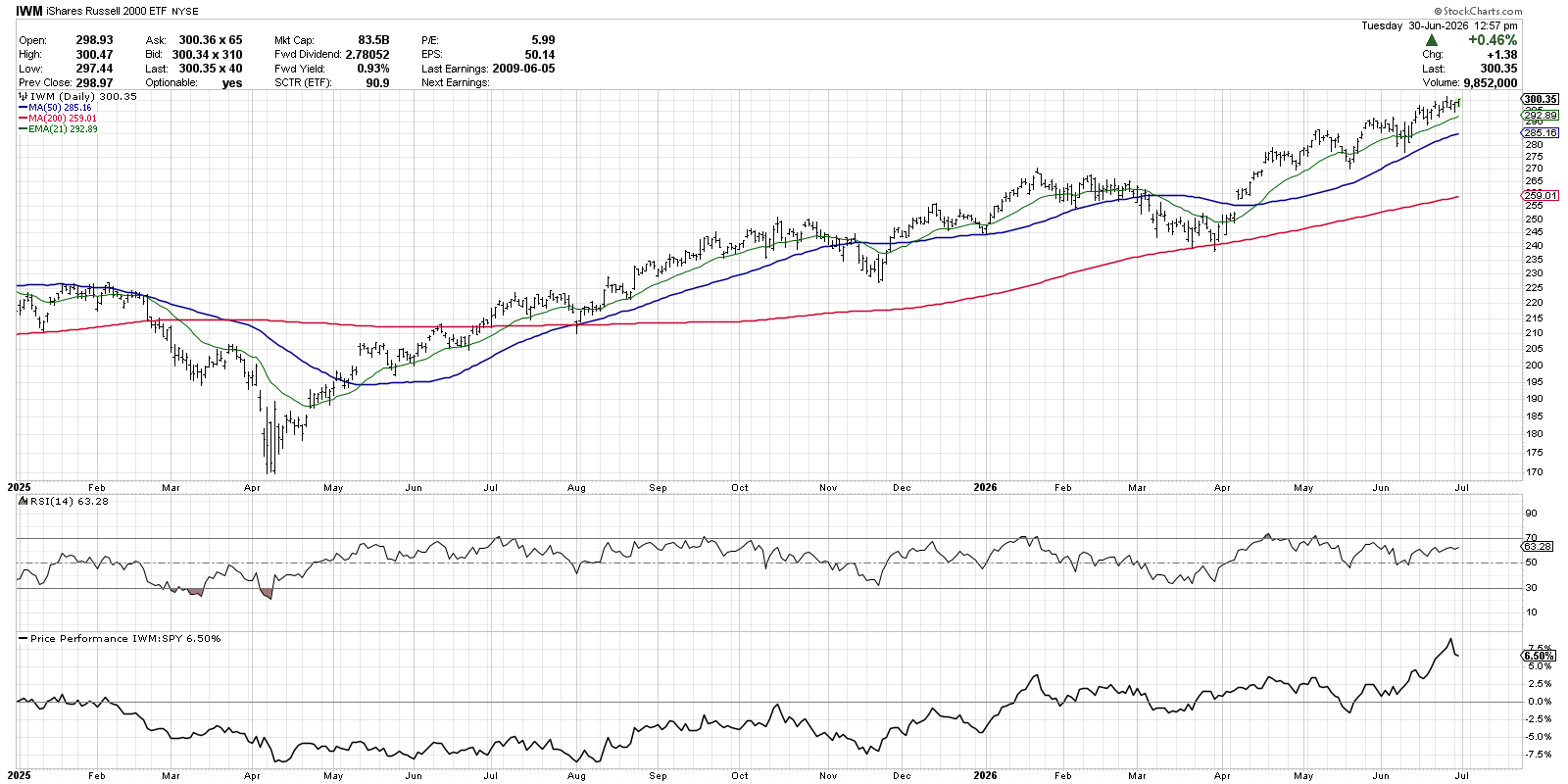
The iShares Russell 2000 ETF (IWM) has been in a slow and steady uptrend since the late March market low. The pattern of higher highs and higher lows has numerous short-term pullbacks to an ascending 21-day exponential moving average (EMA), but those pullbacks have resulted in new swing highs in subsequent weeks.
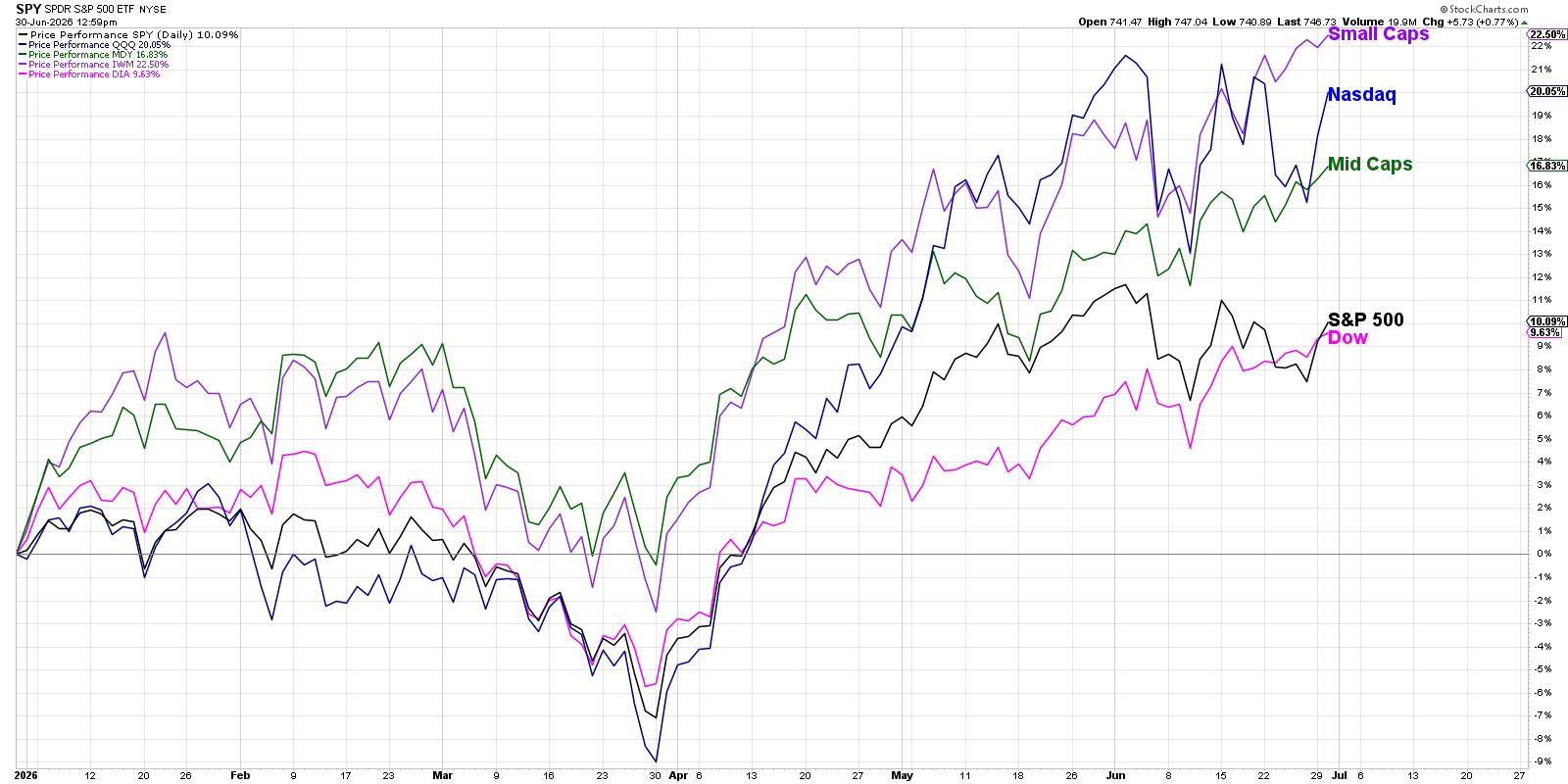
The reality is that small caps have already been outperforming in 2026, with the Russell 2000 edging out the Nasdaq 100 as the top-performing major US equity index.
Note from Dave: That performance chart is the first chart we discuss as part of our Monthly Chart Review, available only to Market Misbehavior premium members! Learn more about our premium memberships and don’t forget to use the code STOCKCHARTS at checkout for 20% off your first 12 months.
Given the downtrend in rates, we see this as a key tailwind for small-caps. And while lower rates can also be helpful for large-cap growth stocks, the performance in small-caps definitely deserves our attention into Q3.
Homebuilders Can Thrive Because of Lower Mortgage Rates
Homebuilders have been struggling of late, with the iShares U.S. Home Construction ETF (ITB) sitting below its 200-day moving average for most of the last four months. In recent weeks, however, ITB has surged back above its 200-day moving average, supported by improving Relative Strength Index (RSI) which reflects better buying power.
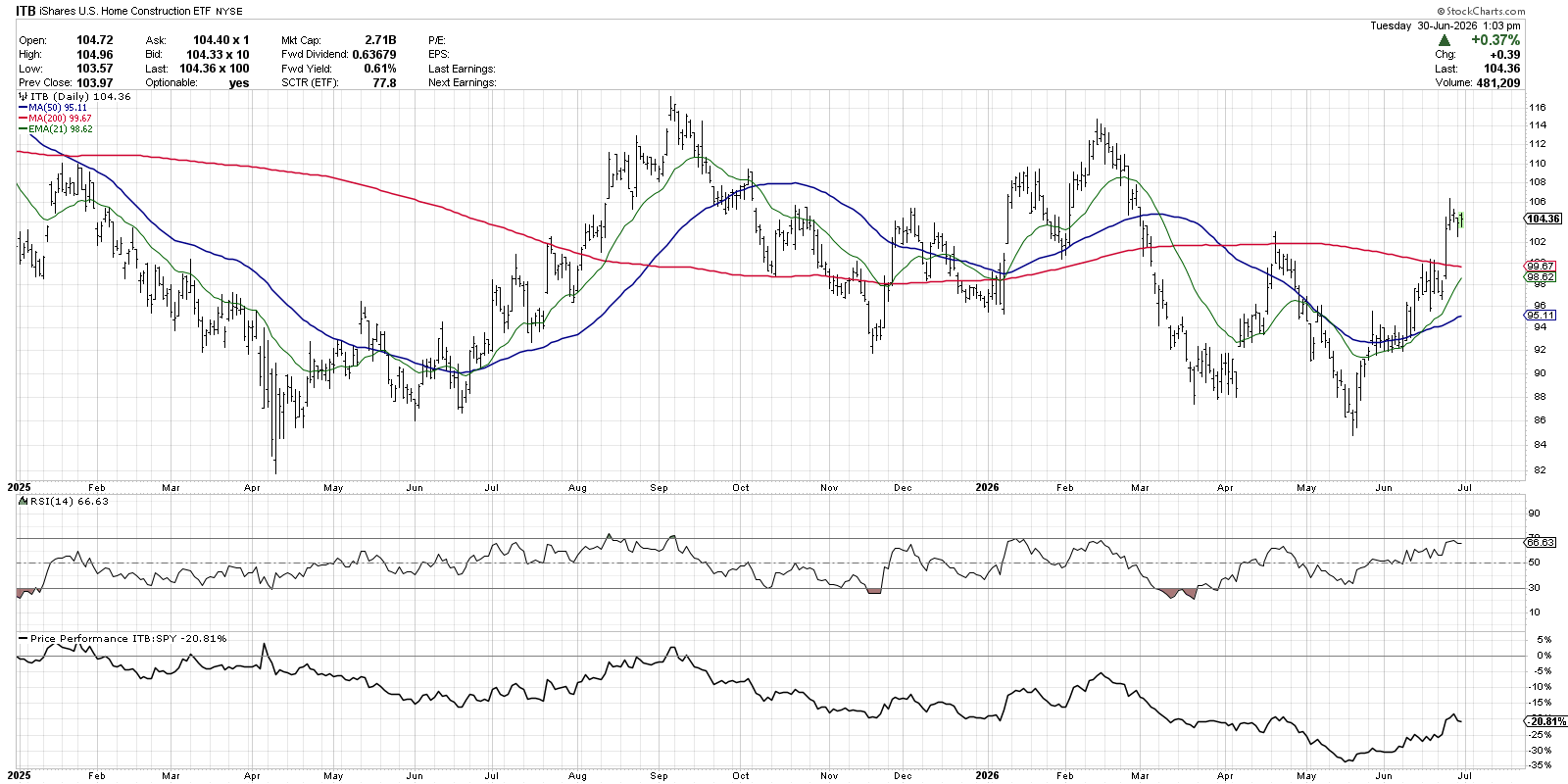
The RSI is perhaps the most important feature of this chart, because a healthy uptrend needs to be supported by stronger price momentum. With the RSI pushing above the 60 level, which we see as a key threshold to confirm a bullish phase, the chart indicates upgraded investor sentiment around this previously underperforming group.
Lower interest rates mean lower mortgage rates for home buyers. And if there are more willing and able buyers, homebuilders stand to benefit from this more favorable interest rate environment.
Bond Proxies Can Benefit From a Search for Yield
If rates are dropping for Treasury bonds, that could mean that investors looking for higher interest rates will search elsewhere. “Bond proxies” in the equity space, meaning stocks with low volatility and higher dividends, could see inflows as more conservative investors look to benefit from their defensive nature.
Utilities and Real Estate are two sectors that come to mind, and the Real Estate Select Sector SPDR Fund (XLRE) reflects a clear uptrend phase of higher highs and higher lows. If there’s anything less than ideal on this chart, it’s that most recent highs have been marked by lower RSI values.
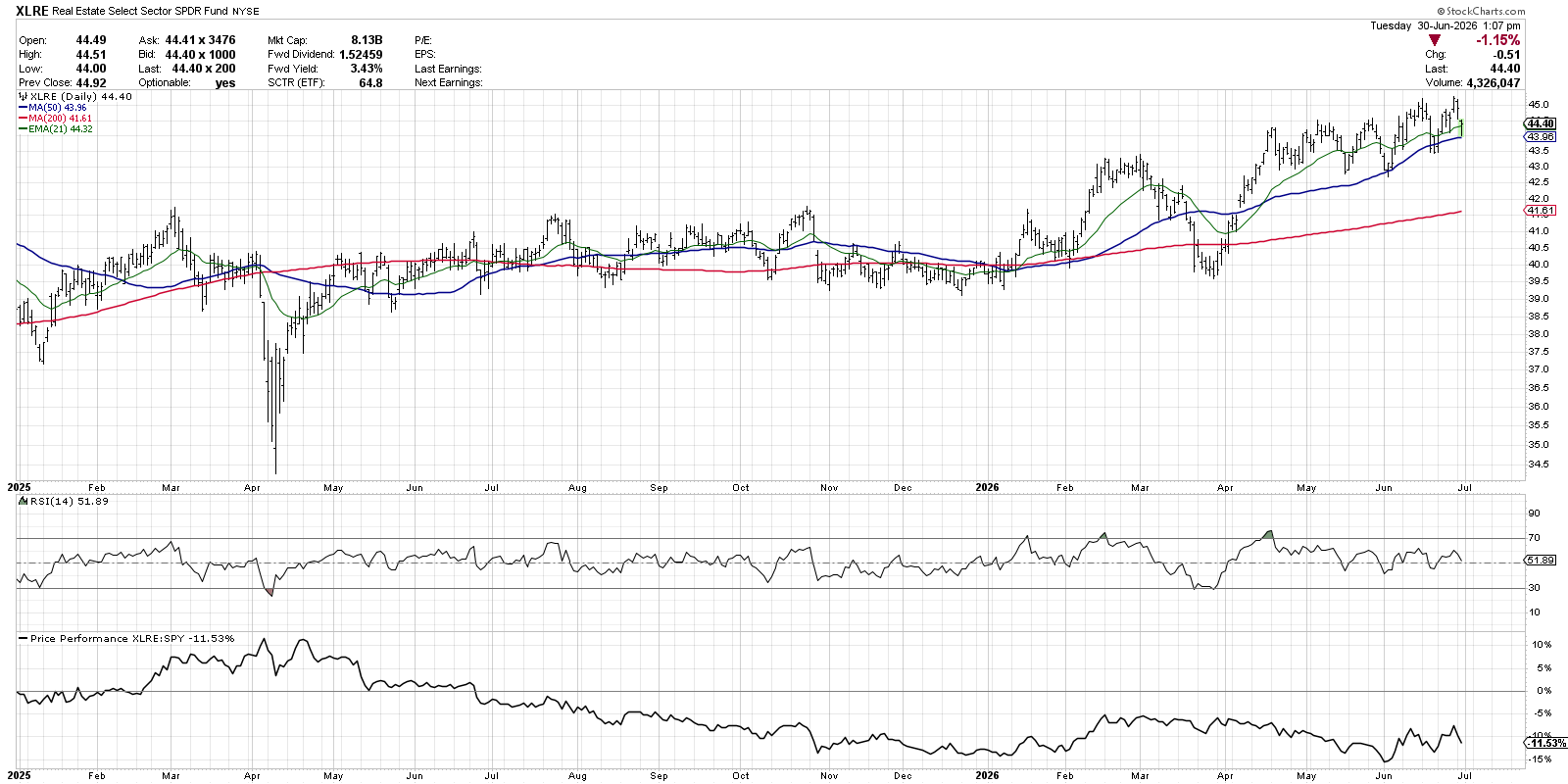
If XLRE can achieve further new highs, confirmed by an RSI popping above the 60 level, that could indicate a new bullish trend for this defensive sector. With many investors evaluating ways to diversify away from high-flying growth stocks, we could see renewed strength in Real Estate and other bond proxies.
By the way, this question was featured in the Friday all-mailbag episode of our daily market recap show, CHART THIS with Dave Keller!

RR#6,
Dave
P.S. Ready to upgrade your investment process? Check out my free behavioral investing course!
David Keller, CMT
President and Chief Strategist
Sierra Alpha Research LLC
marketmisbehavior.com
https://www.youtube.com/c/MarketMisbehavior
Disclaimer: This blog is for educational purposes only and should not be construed as financial advice. The ideas and strategies should never be used without first assessing your own personal and financial situation, or without consulting a financial professional.
The author does not have a position in mentioned securities at the time of publication. Any opinions expressed herein are solely those of the author and do not in any way represent the views or opinions of any other person or entity.