Gas Prices Keep Rising, But Do Consumer Stocks Tell a Different Story This Earnings Season?

Key Takeaways
- Oil’s surge may push retail gas toward $4.50 soon, further straining lower- and middle-income consumers.
- Visa and Starbucks earnings reactions suggest pockets of resilience in overall spending.
- The average Consumer Discretionary stock ETF is now at a 26-year low versus the S&P 500.
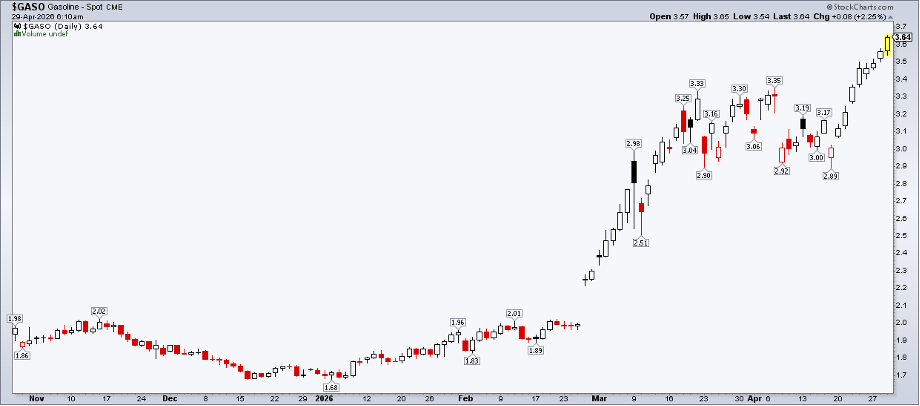
Sixty days into the war in Iran, oil prices have scaled new heights. Brent is near $115, while WTI is comfortably in the triple digits. Refined products, like jet fuel and gasoline, have soared even higher in recent weeks.
Since April 17, the May contract of RBOB gasoline has shot up from $2.89 to $3.64. With the end of the month approaching, June will soon become the prompt, but it’s no bargain at $3.51. For U.S. commuters and consumers, that implies $4.45 at the pump as we edge closer to the beginning of the summer driving season.
Markets Shrug Off Energy Spike... For Now
Go back in time a month and this energy-price scenario would have surely sent the bulls scurrying for cover. Alas, the S&P 500 is close to record highs, with surprising relative strength in small caps since early March. Even international markets, which are more sensitive to imported oil prices, are faring well. Indeed, Japan’s Nikkei 225 tagged 60,000 for the first time on Monday.
Gas prices will sting lower- and middle-income wage earners at home over the months ahead, barring a drastic policy change in the Middle East. But are consumer stocks whistling past the financial graveyard? A pair of earnings movers this week caught my attention.
Why Earnings Reactions Matter More Than the Numbers
Before I dive into the details, traders should remember that reactions to earnings mean a heck of a lot more than the numbers themselves. Why? Consider that the revenue and income figures littering the Street right now cover the January through March period. A lot has changed since then, and prices always look forward. Earnings reports themselves aren’t even coincident indicators; they are lagging indicators. Price is always the best leading indicator.
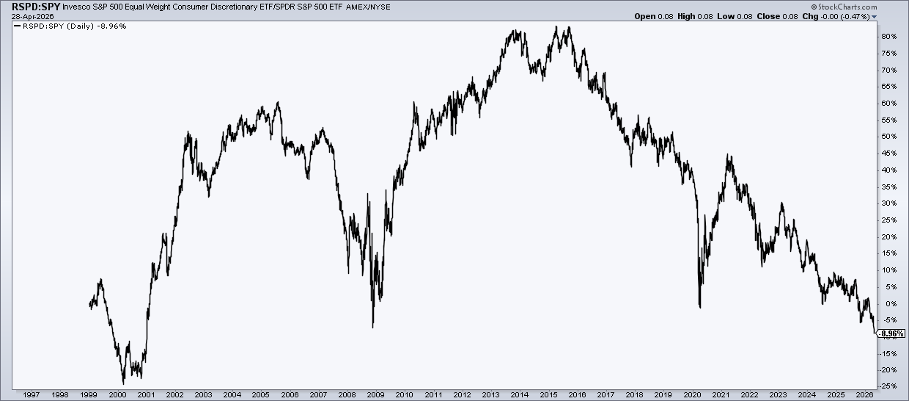
To be clear, consumer stocks have not been trading well. I prefer to gauge the Invesco S&P 500 Equal Weight Consumer Discretionary ETF (RSPD) compared to the S&P 500 ETF (SPY) for retail spending clues, and it’s not a pretty performance picture. The RSPD:SPY ratio just sank to its worst level since the year 2000. You can check out all the S&P 500 equal-weight ETFs on StockCharts’ PerfCharts.
But the two green shoots I spot this week stem from Visa (V) and Starbucks (SBUX). Both reported first-quarter results this past Tuesday evening, and both beat top- and bottom-line estimates. V, from the Financials sector, traded 5% higher by the following morning; SBUX was up the same. Is there a signal to be taken from these possible consumer bellwethers? Let’s find out.
Visa’s Bounce Faces a Technical Reality Check
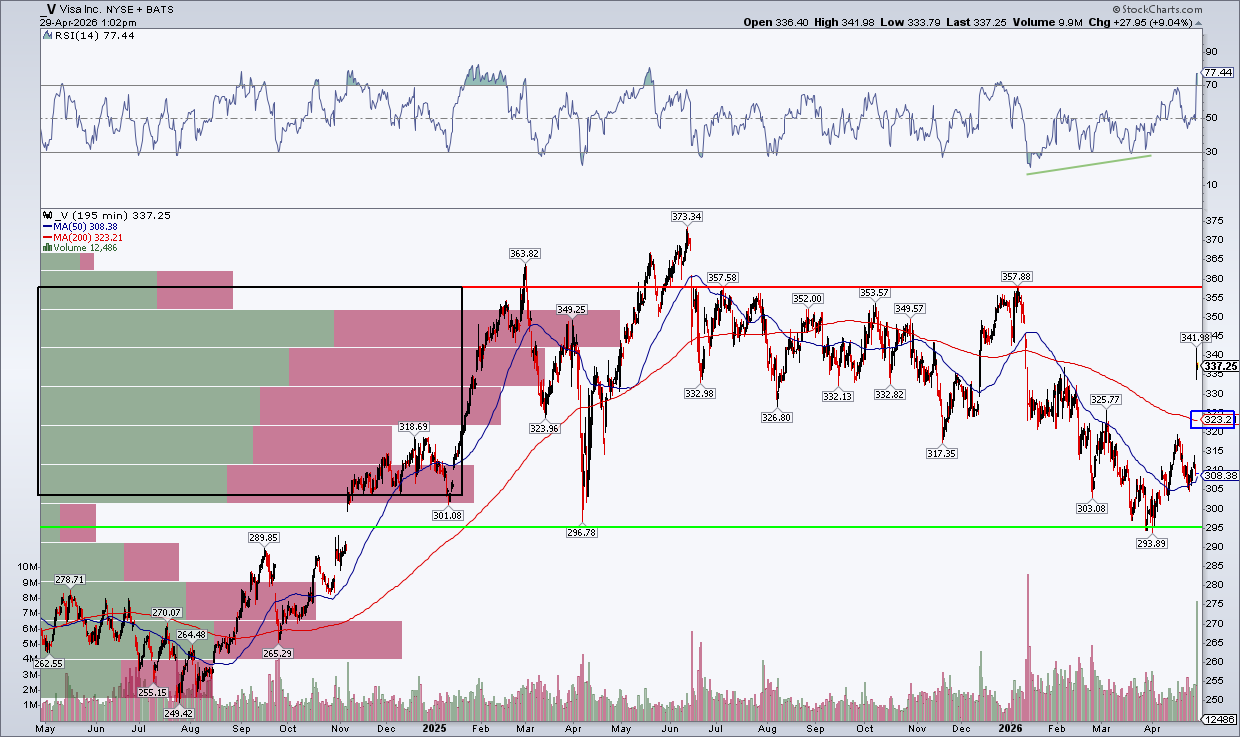
Beginning with Visa, shares of the $620 billion market cap credit card company have had a rough go of it, down 8% YoY coming into the Q1 print (badly lagging the S&P 500). If the post-earnings pop holds, though, it would be its best earnings reaction in at least the last three years. Trading at $325 this morning, the bulls have wood to chop.
Still, a close above the falling 200-day moving average would be a decent start to a possible recovery, as V has not settled above the 200-DMA since early January. What’s more, there remains a high amount of volume by price above today’s level, making further rallies tough on the longs. Support is just below $300, while $352–$358 is resistance.
Starbucks Shows Relative Strength Amid the Chaos
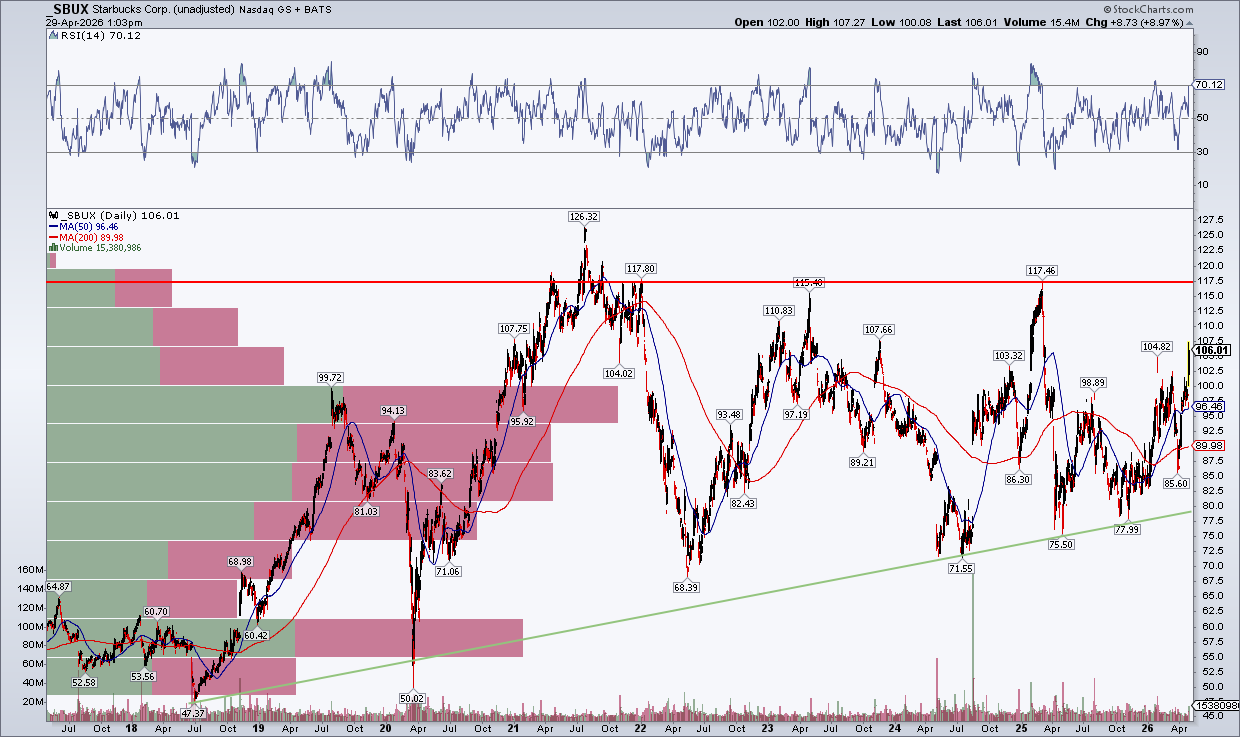
Visa’s chart remains a show-me story; it’s not a convincing argument that the consumer is back. Starbucks, on the other hand, appears more sanguine. Notice in the chart below that, with $102 trading premarket on Wednesday, April 29, the restaurant-industry stock is within a stone’s throw of its best level since March 2025. It’s already there if it were to finish here on the daily closing chart.
SBUX has roasted its bears since last November, but, like many Consumer Discretionary stocks, the alpha cup has run dry since the war broke out. Zooming out, a years-long consolidation pattern continues unfolding. Further gains into the mid-$110s certainly look doable.
Two Signals, One Muddied Consumer Narrative
To be clear, V and SBUX are not pure consumer plays right now. The former battles fears of AI and cryptocurrency displacement, while the latter is an ongoing turnaround story. But I’m encouraged by initial price responses to their respective earnings reports. More consumer clues will come in mid-May when retailer results hit the tape.
A Market Driven by More Than the Consumer
Ultimately, it’s difficult to paint the consumer backdrop with a bullish brush when RSPD:SPY keeps notching fresh century lows. The good news for investors? While consumption is two-thirds of the economy, other themes and technological trends drive stock prices. The S&P 500 and even international stocks have had little problem reaching new highs amid sagging small- and mid-sized Discretionary equities.
The Bottom Line
Consumer sentiment is at an all-time low, just as the S&P 500 is near record highs. Visa and Starbucks offered some hope to the downbeat household spending narrative. Both reported solid Q1 results, and, more importantly, both stocks reacted well by the following morning. Bigger picture, the average Consumer Discretionary stock has checked out, and fresh cycle highs in oil, along with the chance of $4.50 or higher pump prices, continue to weigh.
Disclaimer: This blog is for educational purposes only and should not be construed as financial advice. The ideas and strategies should never be used without first assessing your own personal and financial situation, or without consulting a financial professional.