The Hindenburg Omen Is Sounding Again. Should Investors Be Concerned?

One of the most challenging aspects of market analysis is recognizing when a strong uptrend begins to show signs of internal deterioration. Price can continue pushing higher, fueled by a narrowing group of leaders, while underlying breadth measures suggest a less healthy market environment.
This is why I've always paid close attention to the Hindenburg Omen.
Now, before you dismiss it as another sensationally-named technical indicator, it's worth understanding what the signal is actually designed to identify. At its core, the Hindenburg Omen looks for a market experiencing unusual internal conflict. In a healthy bull market, you would expect most stocks to generally be moving in the same direction. But when an increasing number of stocks are simultaneously making new 52-week highs and new 52-week lows, it suggests that something beneath the surface is beginning to fracture.
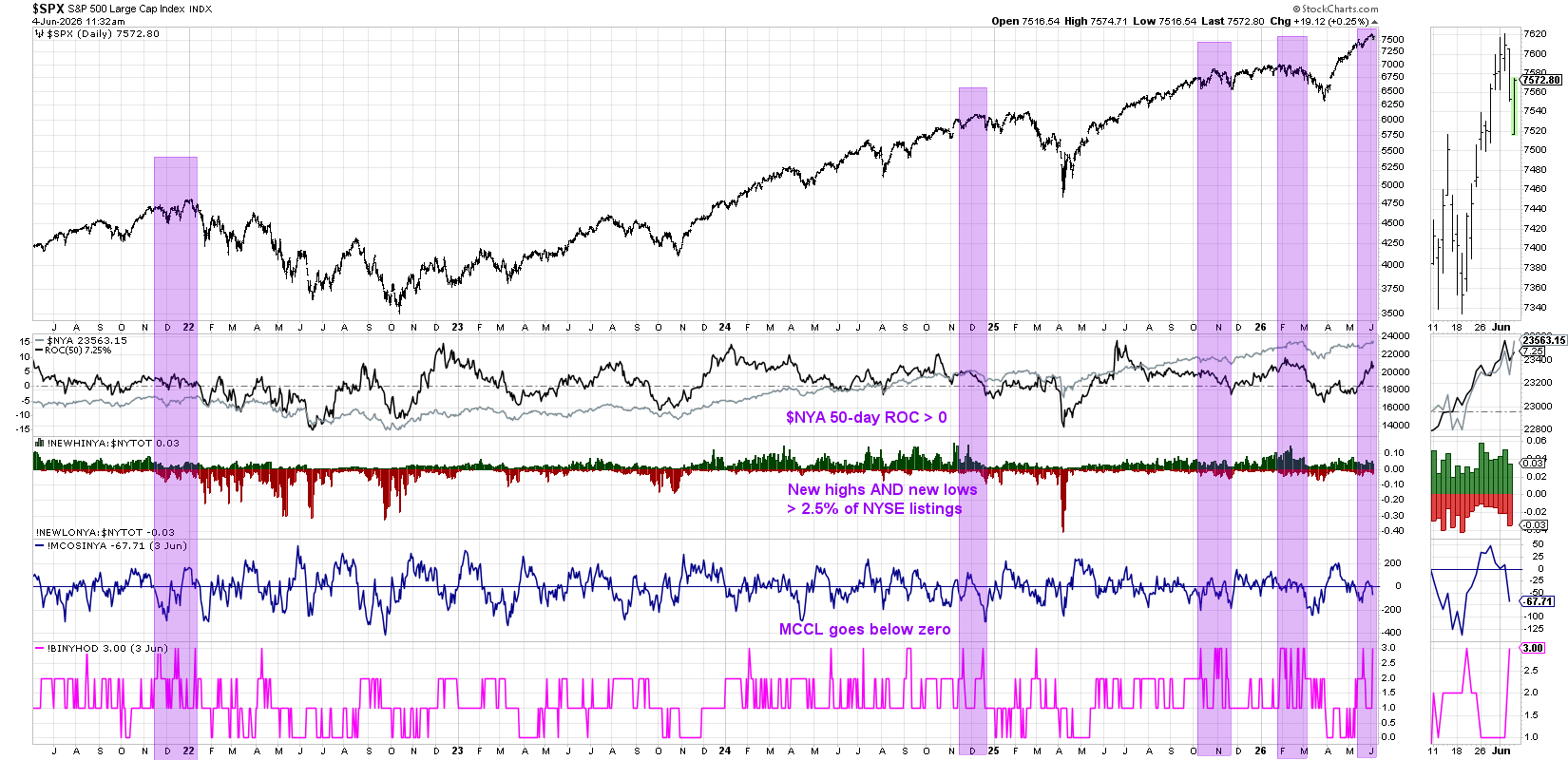
This week, we received a second confirmation of a Hindenburg Omen signal.
What Exactly Is the Hindenburg Omen?
While there are several variations of the indicator, the traditional signal requires three key conditions:
- The market is in a confirmed uptrend.
- A meaningful percentage of stocks are making both new 52-week highs and new 52-week lows.
- The McClellan Oscillator has turned negative, indicating weakening short-term breadth momentum.
The market uptrend condition is clearly satisfied today, with the S&P 500 ($SPX) and Nasdaq ($COMPQ) fresh off another round of new all-time highs. The more important question is whether breadth deterioration has become severe enough to confirm the signal. Based on the data we've been monitoring, that threshold has now been met.
Importantly, the Hindenburg Omen is not a market-timing tool. It doesn't tell you when a decline will begin, how severe it will be, or whether a correction is guaranteed. What it does tell you is that risk levels may be increasing.
Not Every Signal Leads to Trouble
One of the biggest misconceptions about the Hindenburg Omen is that every signal precedes a major market decline. Over the last 12 months, we've seen two previously confirmed signals. The first occurred in October and November of 2025. Despite the warning, the market experienced very little downside follow-through, and the uptrend remained intact.
The second signal appeared in February 2026. In that case, the warning proved much more meaningful, as stocks soon rolled over into the sharp decline that culminated in the late-March low. Same signal, two very different outcomes.
That's why I prefer to think of the Hindenburg Omen as a tornado siren. When you hear a tornado siren, does it guarantee a tornado is headed directly toward your house? Of course not. But ignoring the warning entirely would be a mistake. Most people would take the opportunity to gather supplies, review emergency plans, and prepare for the possibility that conditions could deteriorate quickly.
The siren itself isn't the storm. It's simply a signal that the environment has become more dangerous.
What I'm Watching Now
The current market environment presents an interesting challenge. On the one hand, the major indexes remain in established uptrends. Technology stocks continue to demonstrate impressive relative strength, while many of the largest growth names remain leadership stocks.
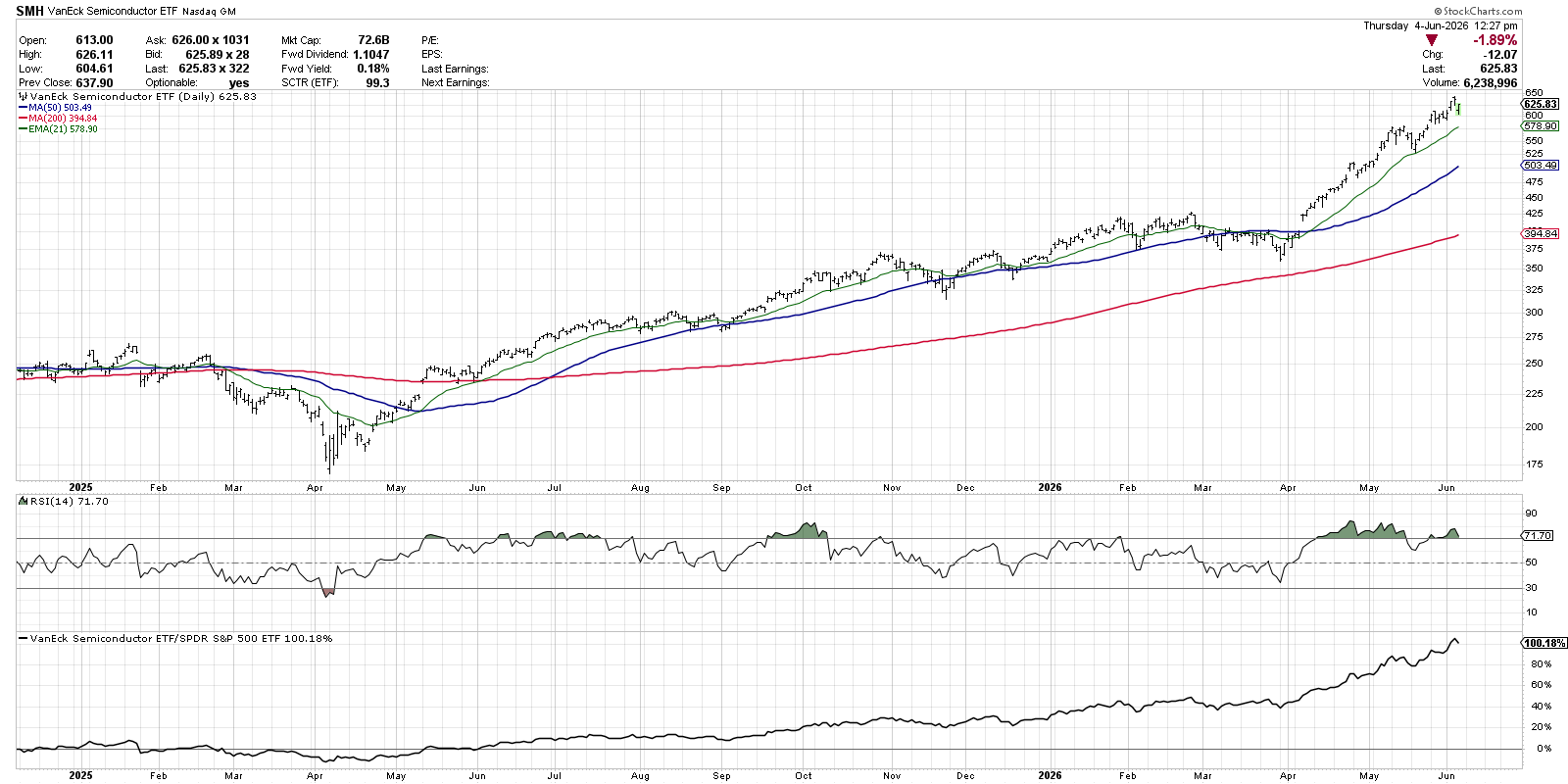
On the other hand, market participation has narrowed considerably. While technology has powered higher, many other sectors have struggled to gain traction. Healthcare remains notably weak, and breadth indicators continue to show signs of deterioration beneath the surface. That divergence is exactly the type of condition the Hindenburg Omen is designed to identify.
As a result, I'm not treating this signal as a reason to become aggressively bearish. The primary trend remains positive until proven otherwise. What I am doing is reviewing stop levels, refining exit strategies, and paying closer attention to signs of further deterioration. If market conditions weaken from here, I want to be prepared rather than surprised.
The Bottom Line
The Hindenburg Omen has earned a reputation as one of the market's most ominous warning signals. In reality, its value comes not from predicting crashes but from highlighting periods when market internals become increasingly unstable.
The tornado siren is sounding again. Does that mean a major correction is inevitable? No. But history suggests it's a warning worth respecting.
For now, the uptrend remains intact. With breadth conditions deteriorating and leadership becoming increasingly concentrated, however, investors would be wise to prepare for the possibility that the music could stop sooner than many expect.
By the way, we discussed the Hindenburg Omen and other macro technical indicators recently on our daily market recap show!

RR#6,
Dave
P.S. Ready to upgrade your investment process? Check out my free behavioral investing course!
David Keller, CMT
President and Chief Strategist
Sierra Alpha Research LLC
marketmisbehavior.com
https://www.youtube.com/c/MarketMisbehavior
Disclaimer: This blog is for educational purposes only and should not be construed as financial advice. The ideas and strategies should never be used without first assessing your own personal and financial situation, or without consulting a financial professional.
The author does not have a position in mentioned securities at the time of publication. Any opinions expressed herein are solely those of the author and do not in any way represent the views or opinions of any other person or entity.