The Great Rotation: Wall Street Buys the Consumer Without Abandoning Big Tech

The stock market may be entering a new bull cycle phase.
After a long period of narrow leadership driven by artificial intelligence (AI) enthusiasm, last week’s underperformance in Technology, together with a rebound in several previously neglected sectors, raises an intriguing question: Is the market’s leadership finally broadening?
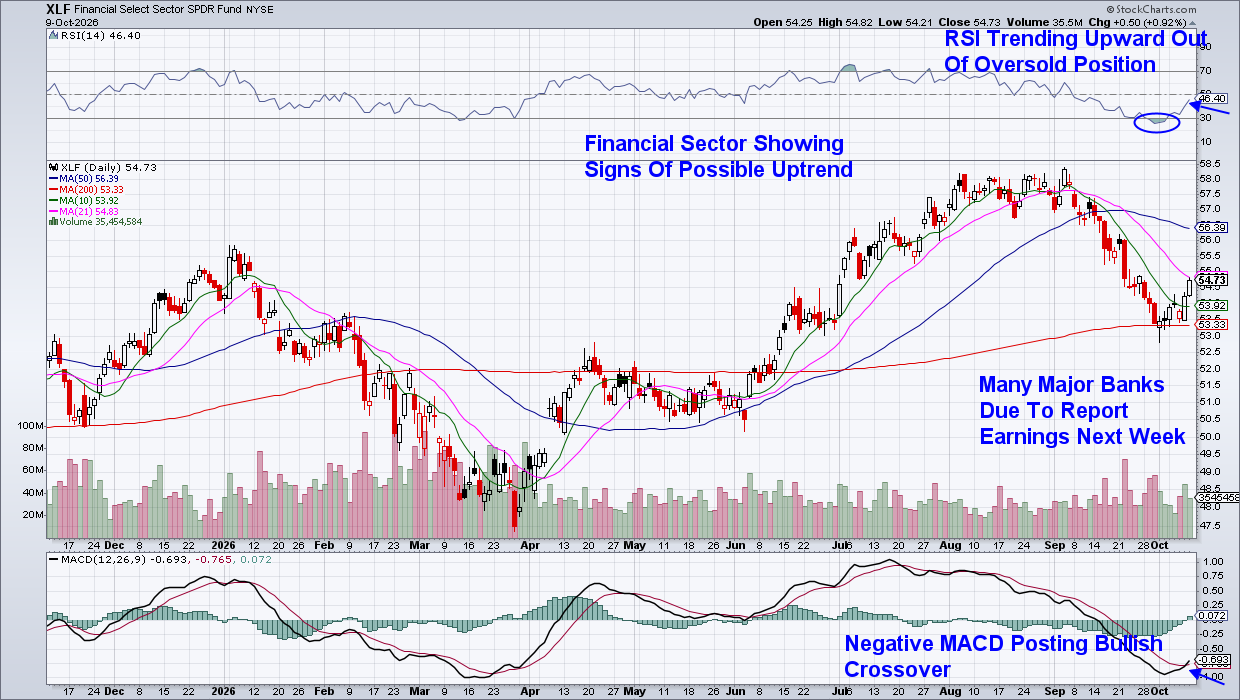
The emerging picture suggests a potential consumer-led rotation rather than a wholesale retreat from technology. Consumer Discretionary (XLY), Consumer Staples (XLP), Health Care (XLV), and Financials (XLF) are attracting renewed attention, while Utilities (XLU) moved higher due to major news.
The move is compelling. A rebound extending into Consumer Discretionary and consumer-facing financial companies could reflect renewed appetite for risk.
Following the Consumer
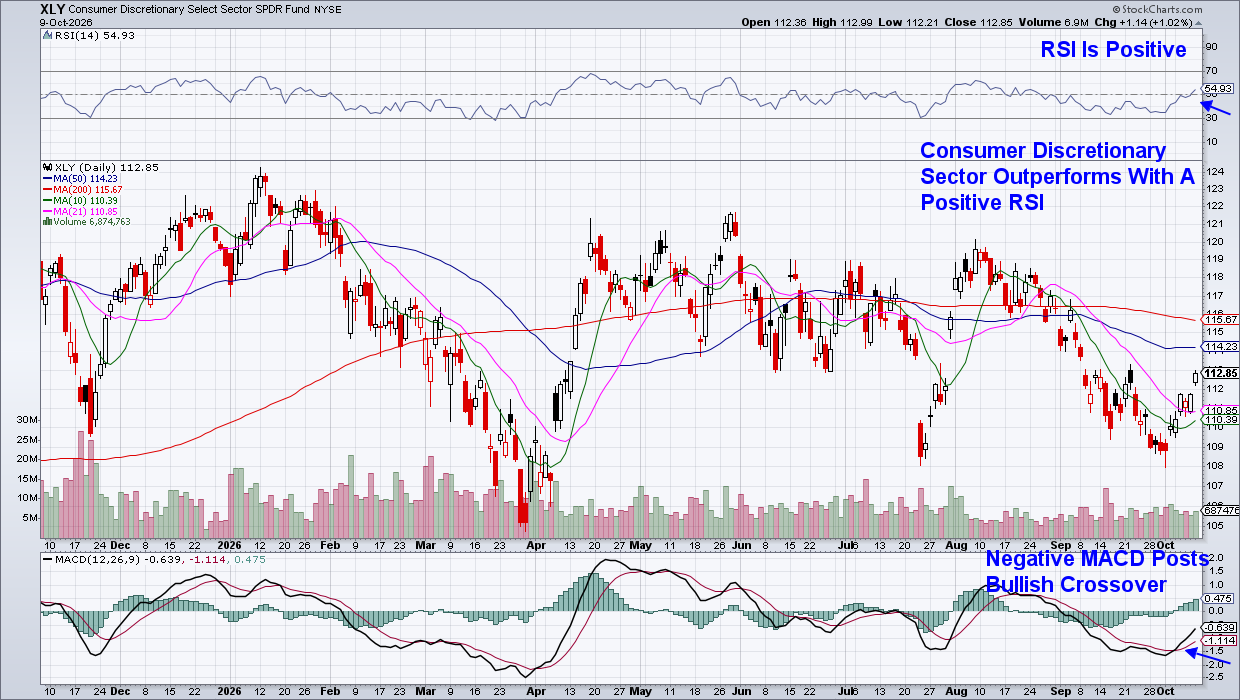
XLY offers a window into investor confidence in household spending, while XLF provides exposure to payment networks and credit card companies. Strength across these areas could signal that investors are finding value in businesses tied to consumer activity after a period of underperformance.
Health Care and Consumer Staples offer additional diversification. However, knowing which companies are poised to trend higher in any of these sectors will be key.
After decades working with professional fund managers and self-directed investors, I’ve developed a keen eye for spotting the stocks with the “it factor”, i.e. the ones positioned to leave the broader market behind.
If you’d like immediate access to stock selection as well as stay on top of this rotation, use this link for a no-cost trial of my twice weekly MEM Edge Report.
Big Tech Is Still in the Game
The most interesting part of this developing rotation is that institutional investors are not abandoning the Magnificent Seven (M7). According to Goldman Sachs prime brokerage data, hedge funds’ net exposure to these mega-cap leaders rose from approximately 15% of total U.S. holdings in July to 22% by October 5.
Rather than signaling an outright exodus from AI and mega-cap growth, the market may be experiencing an expansion of investment opportunities. Investors can continue to favor the long-term earnings potential of the M7 while adding exposure to sectors that have lagged.
What Comes Next?
The critical question is whether this broadening in leadership can persist. A sustained advance in XLY, XLF, XLP, and XLV relative to the broader market would strengthen the case for a genuine rotation.
The risks remain, however. Higher Treasury yields can pressure both growth stocks and rate-sensitive sectors, while inflation and borrowing costs may weigh on consumers. One week of relative performance is not enough to establish a lasting change in market leadership.
The Bottom Line
The Great Rotation may be less about abandoning Big Tech and more about buying the rest of the market. If institutional accumulation continues, the next phase of the bull market could become broader, more diversified, and less dependent on a handful of mega-cap stocks. This would be great news for the markets!
Warmly,
Mary Ellen McGonagle
MEM Investment Research